Seafood - healthy or a modern Trojan horse?
More consumption, but also more pollution
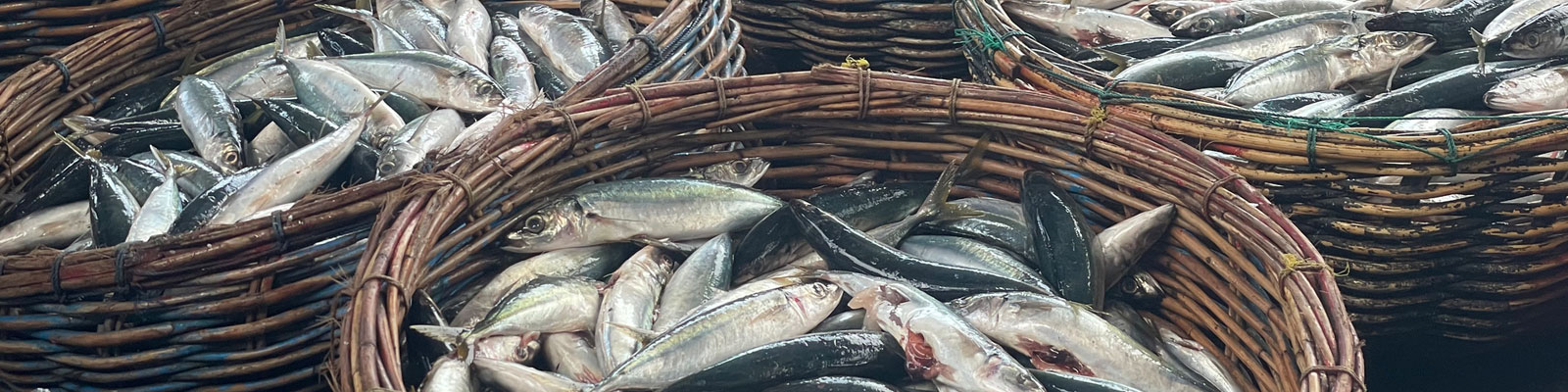
In Indonesia, seafood consumption continues to grow. At the same time, pollution in coastal and marine areas is increasing. Take Semarang, a densely populated and economically active coastal city. Pollution levels there are high: researchers have found microplastics in sediment, in the water, and in various types of seafood commonly consumed by local residents. How much of these microplastics do people actually ingest? And are there differences in exposure between age groups? Until now, no research in Indonesia had linked microplastic contamination in marine products to estimated human intake based on consumption patterns. Differences in exposure between age groups had also not been analysed.
Estimates prone to bias because of knowledge gaps
Our understanding of local microplastic contamination and seafood consumption still contains many gaps. This limits global risk assessment. Without local evidence, estimates of microplastic intake among Indonesians can be easily coloured by subjective assumptions—often leading to overestimation. Hantoro’s research changes this. Not only does she gather data about the local situation, her work also promotes data equity. This prevents the reality on the ground from being overshadowed by generalised international assumptions. As a result, local communities can make decisions based on evidence that truly reflects their own context.
Children the most vulnerable
Hantoro’s study shows that people in Semarang ingest between 6,100 and 17,000 microplastic particles per person per year through seafood consumption. This figure is comparable to estimates from many other global studies. Exposure to microplastics was highest among adolescents, while children had the greatest exposure relative to their (smaller) body size. Unfortunately, there is still no global consensus on how toxic microplastics actually are for humans. But Hantoro’s findings do confirm the need for a precautionary approach to microplastic contamination in seafood, especially when it comes to vulnerable groups.
Recommendations
The research produced several concrete strategic recommendations. Hantoro advises developing monitoring systems for microplastics in coastal areas and in fish markets. She also advocates strengthening the capacity of local laboratories so risk management of microplastics in Indonesia is guided by robust domestic evidence and expertise. Finally, she recommends prioritising public education and food literacy to help reduce microplastic exposure in daily diets.
About Inneke Hantoro
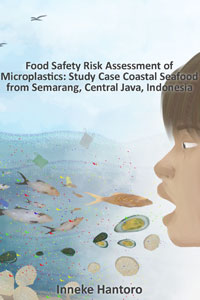
Inneke Hantoro (Semarang, 1978) has been a lecturer in the Food Technology Department at Soegijapranata Catholic University (SCU) in Semarang, Indonesia, since 2002, with a primary focus on food safety issues. On 19 December 2025 at 16:00, she will defend her dissertation “Food Safety Risk Assessment of Microplastics: A Study Case Coastal Seafood from Semarang, Central Java, Indonesia” at the Faculty of Science of the Open University in Heerlen.
Her supervisors are Dr. A.J. Löhr (Open University), Prof. Dr. A.M.J. Ragas (Radboud University), Prof. Dr. Ir. B. Widianarko (Soegijapranata Catholic University), and Dr. F.G.A.J. van Belleghem (Open University). The defence can be attended in person at the Open University in Heerlen and followed online via ou.nl/live.