Program Round 4
The Future of Teaming: Students and AI Agents part 2
Leon Abelmann, Annie Aggarwal, Greta van Bracht, Nayantara Thomas, TU Delft
It is only possible to participate in this session if you attended part 1 of this workshop during round 3.
What happens when AI becomes a teammate? Join this interactive workshop to explore how AI agents can foster richer student collaboration in projects and enable collaborative learning. We invite participants to experience AI-supported teamwork firsthand by co designing an educational activity with AI agents and sharing insights and findings from our educational intervention. Through guided reflection and discussion, we’ll examine how AI can reshape collaboration, creativity, and learning
*It is important for participants to bring laptops for this session.
 |
 |
 |
 |
Strategies to adapt to declining high school math skills: Math Support Line
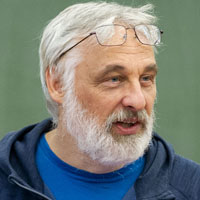
Herbert Wormeester, Michiel Scholten, Cornelise Vreman, Universiteit Twente
In response to declining high school math skills, the Advanced Technology Programme of the University of Twente launched the Math Support Line (MSL) in 2022. In small weekly sessions, a Teaching Assistant helps first-year students strengthen both their math skills and their study strategies. With three extra hours per week, the MSL offers personal support with clear results: quite some participants pass their math exams and report more confidence in study strategies.
During the ICAB session, we will present more details about the design of this MSL. We also would like to exchange how other programmes respond to declining high school math skills.
Weaving Science Communication into Your Curricula
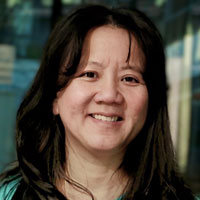
Karin Lenssen, May Lee, Enide Maegherman, Linda Rieswijk, Maastricht University
University graduates increasingly need science communication skills to navigate today's information-based society. However, science communication is still a relatively new discipline, and we are still determining what STEM students should learn and how we can best develop their knowledge and skills in science communication. As educators, we can work together to shape this
By sharing our experiences and approaches, we can develop learning goals and teaching practices that can be embedded across courses, departments, faculties, and universities.
In this workshop, we will propose a science communication education framework that we developed as educators from four departments within Maastricht University’s Faculty of Science and Engineering. The framework links science communication theories and skills to learning activities at various levels within the curriculum.
Together, we will explore the framework and discuss how it can be applied to your own educational context. We will work together to answer the question of how science communication can be more deliberately woven into STEM education.
 |
 |
 |
 |
Beyond Student Evaluations: Using Teacher-to-Teacher Observation to Strengthen Teaching and Curriculum Alignment
Marina van Gog, Richard Hendriks, TU Delft
While student evaluations play an important role in educational quality assurance, they barely provide the type of feedback needed for insight in different teaching methods and for the alignment between the courses. To address this, the Bachelor's programme in Electrical Engineering has implemented a structured colleague observation initiative that brings educators together to observe classes, exchange feedback, and learn from one another. In this session, participants will gain hands-on experience with the observation and feedback framework used during the teacher-to-teacher observation visits. We will share the findings and discuss common challenges.


Stop teaching entrepreneurship only to entrepreneurs
Robbin Reijnen, Wageningen University & Research
Entrepreneurship education is often organised at the margins of the university: in electives, challenges, incubators and extracurricular programmes. But in a world characterised by technological and societal uncertainty, the ability to recognise opportunities, engage stakeholders, experiment and act under uncertainty is relevant to far more students than those planning to start a company.
In this interactive session, we explore entrepreneurial change agency as a broader educational ambition for academic science education. Participants will examine where change agency already occurs in their own education, redesign one existing learning activity and discuss what it takes to move from promising educational experiments towards scalable institutional practice.
The central question: How can we scale entrepreneurial learning and change agency for the benefit of society?
Beyond Chatbots: Pedagogically Aligned and Personalized AI Tutors
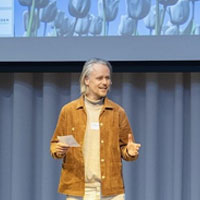
Deniz Iren, Open Universiteit
This interactive workshop explores how generative AI tutors can move beyond generic question-answering toward pedagogically aligned and personalized learning support. Using WiseTutor as a practical case, participants will examine how an AI tutor can be aligned with learning objectives, course materials, instructional design, and teacher intentions, while adapting its interactions to individual learners. We will discuss key design choices around pedagogical roles, personalization, learner modelling, and teacher control, and participants will have the opportunity to interact with WiseTutor and reflect on how such approaches could be applied in their own educational contexts.